
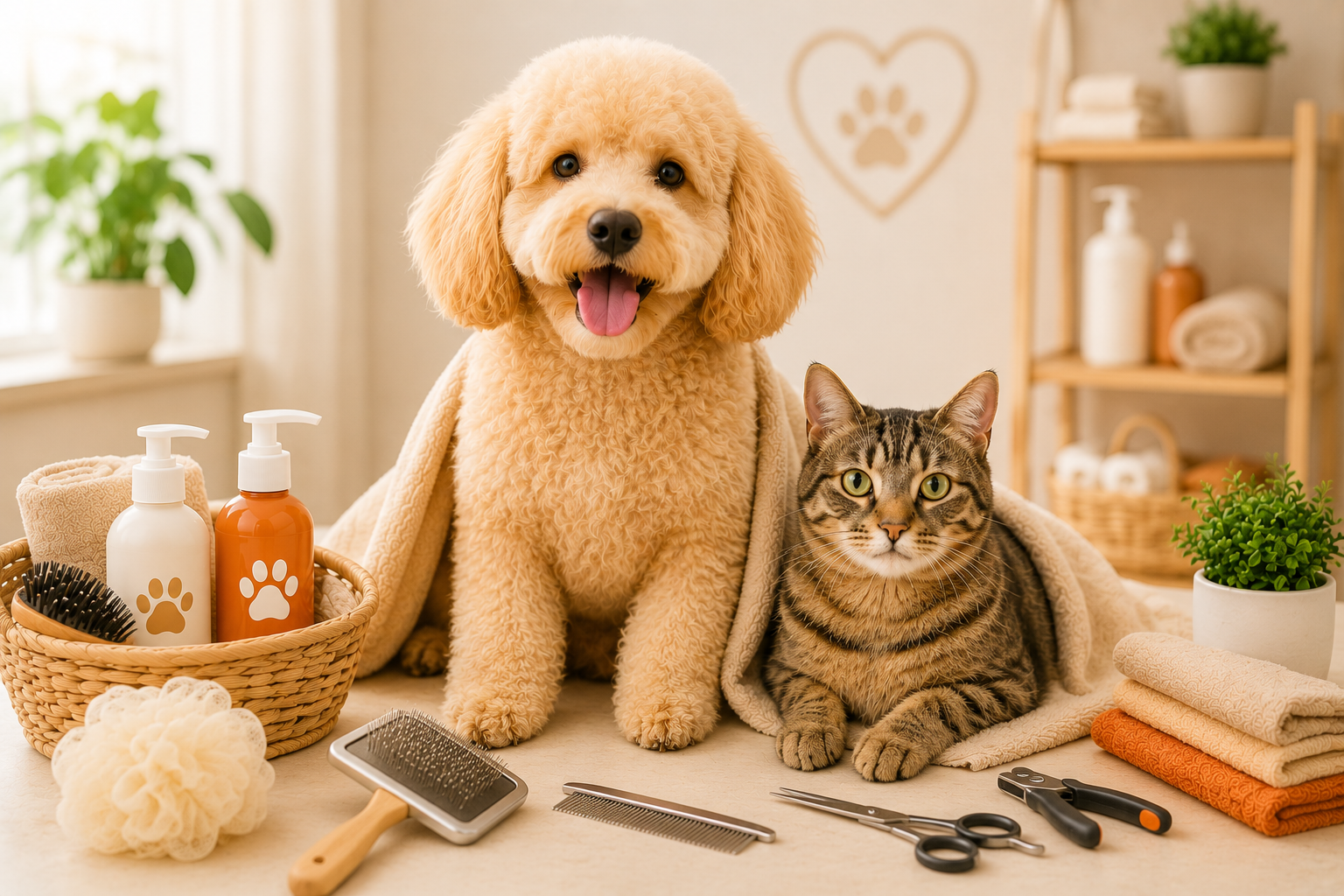
A clean, comfortable pet is a happy pet—and regular grooming is about much more than making your dog or cat look their best.
Grooming gives you an opportunity to care for your pet’s coat, paws, nails, ears, and teeth while spending positive one-on-one time together. It can also help you notice changes such as skin irritation, unusual lumps, damaged nails, or other concerns that may need professional attention.
The right grooming routine isn’t identical for every pet. A long-haired cat, a short-haired dog, a double-coated breed, and a senior pet may all need very different care.
The key is simple:
Use the right tools, follow a routine suited to your pet, keep grooming positive, and know when it’s time to call a professional.
In this guide, we’ll cover the essential pet grooming habits every dog and cat parent should understand—from brushing and bathing to nail, ear, paw, and dental care.
Why Is Pet Grooming Important?
Regular grooming helps keep your pet’s coat and body clean and gives you an opportunity to become familiar with what is normal for them.
Brushing can help remove loose hair, dirt, and debris, while appropriate nail care helps prevent nails from becoming excessively long. Grooming sessions can also provide an opportunity to look closely at your pet’s skin, paws, ears, eyes, and coat.
But grooming isn’t about doing everything every day.
Your pet’s grooming schedule should depend on their breed, coat type, lifestyle, age, and individual needs.
Some pets require frequent brushing and professional grooming, while others need relatively little coat maintenance.
1. Brush Your Pet Regularly
Brushing is one of the easiest grooming habits to build into your routine.
For dogs, regular brushing can remove loose hair and dirt, help control shedding, and reduce the likelihood of mats and tangles. The appropriate brush depends on the texture and length of the coat.
Cats can also benefit from regular brushing, particularly those with long or dense coats.
Benefits of regular brushing include:
- Removing loose fur
- Reducing tangles and mats
- Helping control shedding
- Removing dirt and debris
- Keeping the coat looking neat
- Giving you an opportunity to inspect the skin
Choose the right brush
There isn’t one grooming brush that works perfectly for every pet.
Depending on your pet’s coat, you may need:
- Bristle brushes
- Slicker brushes
- Pin brushes
- Combs
- Undercoat rakes
- De-shedding tools
If you’re unsure which tool is appropriate, ask your veterinarian or professional groomer.
Be gentle
Don’t pull aggressively through knots.
Mats can be painful, and trying to cut them out with household scissors can accidentally injure your pet. Professional help may be the safest option for severe matting.
2. Bathe Your Pet When They Actually Need It
Bathing is important, but more bathing isn’t necessarily better.
Dogs generally don’t need daily baths, and the appropriate frequency varies with breed, coat, activity level, lifestyle, and individual needs. Overbathing can remove natural oils and contribute to dry or irritated skin.
For most pets, the goal is to keep the coat clean without unnecessarily disrupting the skin.
Before a bath:
- Brush the coat.
- Remove loose debris.
- Prepare towels and grooming supplies.
- Use a pet-specific shampoo.
- Make sure the water is comfortably warm.
- Keep the environment secure and non-slip.
Never use human shampoo or other human grooming products on your pet unless a veterinarian specifically recommends a product for that purpose.
After bathing
Rinse thoroughly.
Remaining shampoo can irritate the skin, so take enough time to remove all product from the coat.
Then dry your pet thoroughly and keep them comfortably warm.
3. Take Care of Your Pet’s Nails
Long nails can become uncomfortable and may interfere with normal movement.
Nail trimming should be done carefully because the nail contains blood vessels and nerves in an area commonly called the quick. Cutting too far can cause pain and bleeding.
If you aren’t confident trimming your pet’s nails, ask a veterinarian or professional groomer to show you the correct technique.
Make nail care easier
Don’t wait until nail trimming becomes an emergency.
Gradually get your pet comfortable with:
- Having their paws touched
- Seeing the nail clippers
- Hearing grooming tools
- Having individual nails handled
Reward calm behavior with praise or an appropriate treat.
Short, positive sessions are often easier than trying to complete everything at once.
4. Keep Your Pet’s Ears Clean and Dry
Ear care is an important part of grooming, especially for pets that are prone to ear problems.
During grooming, look for changes such as:
- Redness
- Swelling
- Unusual discharge
- Strong odor
- Excessive debris
- Frequent head shaking
- Scratching around the ears
These signs can indicate an ear problem and should be evaluated by a veterinarian rather than treated blindly at home.
After bathing or swimming
Pay particular attention to keeping the ears appropriately dry.
Moisture can contribute to an environment where bacteria or yeast may multiply in susceptible dogs.
Don’t push cotton swabs or other objects deep into your pet’s ear canal.
When in doubt, ask your veterinarian which ear-cleaning method and product are appropriate for your pet.
5. Don’t Forget Dental Care
A beautiful coat isn’t the only sign of good grooming.
Your pet’s mouth deserves attention too.
Regular tooth brushing is an important part of home dental care. The AVMA recommends that pets have their teeth checked by a veterinarian at least annually, with earlier evaluation if concerning signs appear.
Watch for:
- Persistent bad breath
- Discolored or heavily tartar-covered teeth
- Broken or loose teeth
- Difficulty chewing
- Dropping food
- Reduced appetite
- Bleeding around the mouth
- Swelling
- Signs of oral pain
If you notice these symptoms, contact your veterinarian.
A helpful habit
Introduce tooth brushing gradually.
Let your pet become comfortable with having their mouth touched before introducing a pet-specific toothbrush and toothpaste.
And remember:
Never assume human toothpaste is safe for pets.
Some human toothpaste ingredients can be dangerous to animals.
6. Check Your Pet’s Paws
Your pet’s paws experience a lot every day.
Walking surfaces, weather, dirt, moisture, and outdoor debris can all affect them.
During regular grooming, take a quick look at:
- Paw pads
- Between the toes
- Nails
- Fur around the paws
- Cuts or abrasions
- Foreign objects
- Excessive dryness or cracking
For dogs, excessive hair between the toes can sometimes become matted or cause problems, so paw care should be adapted to the individual dog.
After outdoor adventures, wiping muddy or dirty paws can also help keep your home cleaner.
7. Make Grooming a Positive Experience
Some pets love grooming.
Others act as though the brush is their greatest enemy.
Don’t force your pet through long grooming sessions if they’re frightened or highly stressed.
Instead, build tolerance gradually.
Try this approach:
Step 1: Let your pet investigate the grooming tool.
Step 2: Reward calm behavior.
Step 3: Touch the area you eventually want to groom.
Step 4: Introduce the brush for a few seconds.
Step 5: Reward again.
Step 6: Slowly increase the grooming time.
The goal is to create positive associations.
This is especially useful for puppies and kittens because early, gentle exposure can help them become more comfortable with grooming as they grow.
8. Know Your Pet’s Coat Type
One of the biggest grooming mistakes is assuming every pet needs the same routine.
They don’t.
Short-haired pets
Usually require less coat maintenance, but regular brushing can still help remove loose hair and debris.
Long-haired pets
Often need more frequent brushing to prevent tangles and mats.
Double-coated dogs
May require specific brushing techniques and tools designed to manage the undercoat. Professional grooming guidance can be particularly useful for these breeds.
Curly or continuously growing coats
May require regular professional grooming to maintain coat length and prevent matting.
If you’re uncertain about your pet’s coat requirements, ask a professional groomer or veterinarian.
9. Watch for Mats and Tangles
Mats aren’t simply a cosmetic problem.
Tangled hair can pull on the skin and make grooming uncomfortable or painful.
Mats commonly develop in areas such as:
- Behind the ears
- Under the legs
- Around the neck
- Beneath the collar
- Around the tail
- Between the legs
Check these areas regularly, particularly if your pet has long hair.
Important:
Don’t use household scissors to cut severe mats out of your pet’s coat.
A sudden movement can result in an accidental cut.
Professional groomers have the tools and experience to deal with difficult coats safely.
10. Know When Professional Grooming Is the Better Choice
Home grooming is fantastic for routine maintenance.
But sometimes professional help is the safest option.
Consider a professional groomer when:
- Your pet has severe matting
- You need a breed-specific haircut
- Your pet becomes extremely stressed
- You aren’t comfortable trimming nails
- Your pet needs specialized coat care
- You aren’t confident using clippers
- Your pet has difficult-to-manage areas
Professional groomers are trained to use appropriate equipment and techniques, and they can often identify changes that deserve veterinary attention.
🐶 Dog Grooming vs. 🐱 Cat Grooming
Dogs and cats have different grooming needs.
Dog grooming
Depending on breed and coat, a dog’s routine may include:
- Brushing
- Bathing
- Nail trimming
- Ear care
- Dental care
- Paw checks
- Coat trimming
- Professional grooming
Some dogs need frequent professional grooming, while others require only occasional visits.
Cat grooming
Many cats naturally maintain much of their coat themselves.
However, brushing can still be valuable, especially for long-haired cats.
Regular grooming can help you notice:
- Mats
- Skin changes
- Parasites
- Unusual lumps
- Coat changes
- Areas your cat may be over-grooming
Cats should also receive appropriate nail and dental care.
🧴 Essential Pet Grooming Supplies
You don’t need to buy every grooming product on the market.
Start with the basics appropriate for your pet.
Basic grooming kit
For dogs and cats:
- Appropriate brush or comb
- Pet-specific shampoo when bathing is needed
- Nail clippers or an appropriate nail grinder
- Pet towels
- Pet-safe dental supplies
- Appropriate ear-care products
- Grooming wipes when useful
- Treats for positive reinforcement
The correct equipment depends on your pet’s coat, size, temperament, and grooming requirements. Professional grooming standards emphasize choosing tools according to coat type and the specific task.
🗓️ How Often Should You Groom Your Pet?
There isn’t one universal grooming schedule.
Here’s a general starting point, not a substitute for your veterinarian or groomer’s advice:
| Grooming task | General approach |
|---|---|
| Brushing | Based on coat type and shedding |
| Bathing | When needed; avoid unnecessary overbathing |
| Nail care | Check regularly and trim as needed |
| Ear checks | Check routinely; clean according to individual needs |
| Dental care | Regular home care; veterinary checks |
| Paw checks | Regularly, especially after outdoor activity |
| Professional grooming | Based on breed, coat and individual needs |
The exact routine should be customized to your pet.
❤️ Grooming Is Also Bonding Time
One of the best things about grooming is that it doesn’t have to feel like a chore.
A quiet brushing session can become quality time between you and your pet.
Talk gently.
Give them breaks.
Reward calm behavior.
Pay attention to their body language.
And stop if they are becoming overly stressed or uncomfortable.
Over time, your pet may begin to recognize grooming as simply another part of their normal routine.
Small moments of care can build a stronger relationship.
🚨 When Grooming Reveals Something Concerning
Because grooming involves looking closely at your pet, you may occasionally notice something unusual.
Contact your veterinarian if you notice things such as:
- New or unexplained lumps
- Persistent skin irritation
- Open wounds
- Significant hair loss
- Strong or unusual odors
- Repeated ear problems
- Bleeding
- Oral pain
- Broken teeth
- Sudden changes in grooming behavior
- Significant changes in appetite or behavior
Grooming should not replace veterinary care.
Instead, think of grooming as one more opportunity to notice what is normal for your pet—and recognize when something has changed.
🐾 Your Simple Pet Grooming Checklist
Save this checklist for your next grooming session.
Every grooming session
☐ Check the coat
☐ Brush as appropriate
☐ Look for mats and tangles
☐ Check paws
☐ Check nails
☐ Look at the ears
☐ Check the skin for unusual changes
☐ Check around the eyes
☐ Observe your pet’s behavior
Regularly
☐ Bathe when appropriate
☐ Brush teeth
☐ Trim nails
☐ Clean ears when appropriate
☐ Wash grooming tools
☐ Schedule professional grooming when needed
☐ Keep up with veterinary care
Final Thoughts: Better Everyday Grooming for Happier Pets
Pet grooming doesn’t have to be complicated.
You don’t need a professional grooming salon in your bathroom or an entire cabinet full of products.
What matters most is consistent, appropriate care.
Brush the coat.
Keep nails at an appropriate length.
Look after paws and ears.
Pay attention to dental health.
Bathe when necessary.
Use products designed for pets.
And don’t hesitate to ask a professional for help when a grooming task becomes difficult or unsafe.
Most importantly, make grooming a positive experience.
Because grooming isn’t just about a cleaner coat.
It’s about comfort, care, connection, and noticing the little things that make your pet unique.
At Atloras, we believe that better pet care begins with small everyday choices.
Better grooming.
Better care.
Better everyday life for pets. 🐾
Frequently Asked Questions About Pet Grooming
How often should I groom my pet?
It depends on the pet. Breed, coat type, hair length, lifestyle, age, and individual needs all influence grooming frequency. Some dogs need frequent brushing and professional grooming, while others need considerably less.
How often should I bathe my dog?
There is no single schedule that works for every dog. Bathing frequency depends on coat type, lifestyle, activity, and individual needs. Overbathing can remove natural oils and contribute to dry skin.
Can I use human shampoo on my dog or cat?
It’s best to use products specifically formulated for pets. Human grooming products aren’t necessarily appropriate for animal skin and can cause irritation or other problems.
Should I brush my pet’s teeth?
Regular dental care is an important part of pet health. Ask your veterinarian about an appropriate home dental-care routine, and have your pet’s teeth checked regularly by a veterinary professional.
How do I know which brush to use?
The best brush depends on your pet’s coat type, length, and texture. Slicker brushes, bristle brushes, pin brushes, combs, and undercoat tools all have different purposes.
What should I do if my pet has severe mats?
Don’t try to cut severe mats out with household scissors. Mats can be close to the skin, and an unexpected movement can cause injury. A professional groomer or veterinarian can advise on the safest approach.
Should I groom my pet at home or use a professional groomer?
Both can be appropriate. Routine brushing, basic care, and gentle maintenance can often be done at home, while complicated haircuts, severe matting, difficult nail trims, or pets that become highly stressed may be better handled by an experienced professional.
